A car can look solid on Friday and feel tired by spring.
Here in Calgary, that shift is easy to spot. Snow, slush, gravel, and road salt gang up on steel all winter. Then the damage shows up as stains, flakes, soft spots, and panels that lose value fast. We see it every week when people call us for quotes on old sedans, rusty trucks, and project cars that sat too long.
Quick answer
Rust forms when iron and steel meet moisture and oxygen. Road salt speeds up that oxidation process. Small rust spots can turn into rust holes, weak bodywork, and lower scrap value because severe corrosion cuts reusable parts, adds handling issues, and strips away weight and condition.
The Science Behind Rust and What Causes Rust On Cars
Rust is not random.
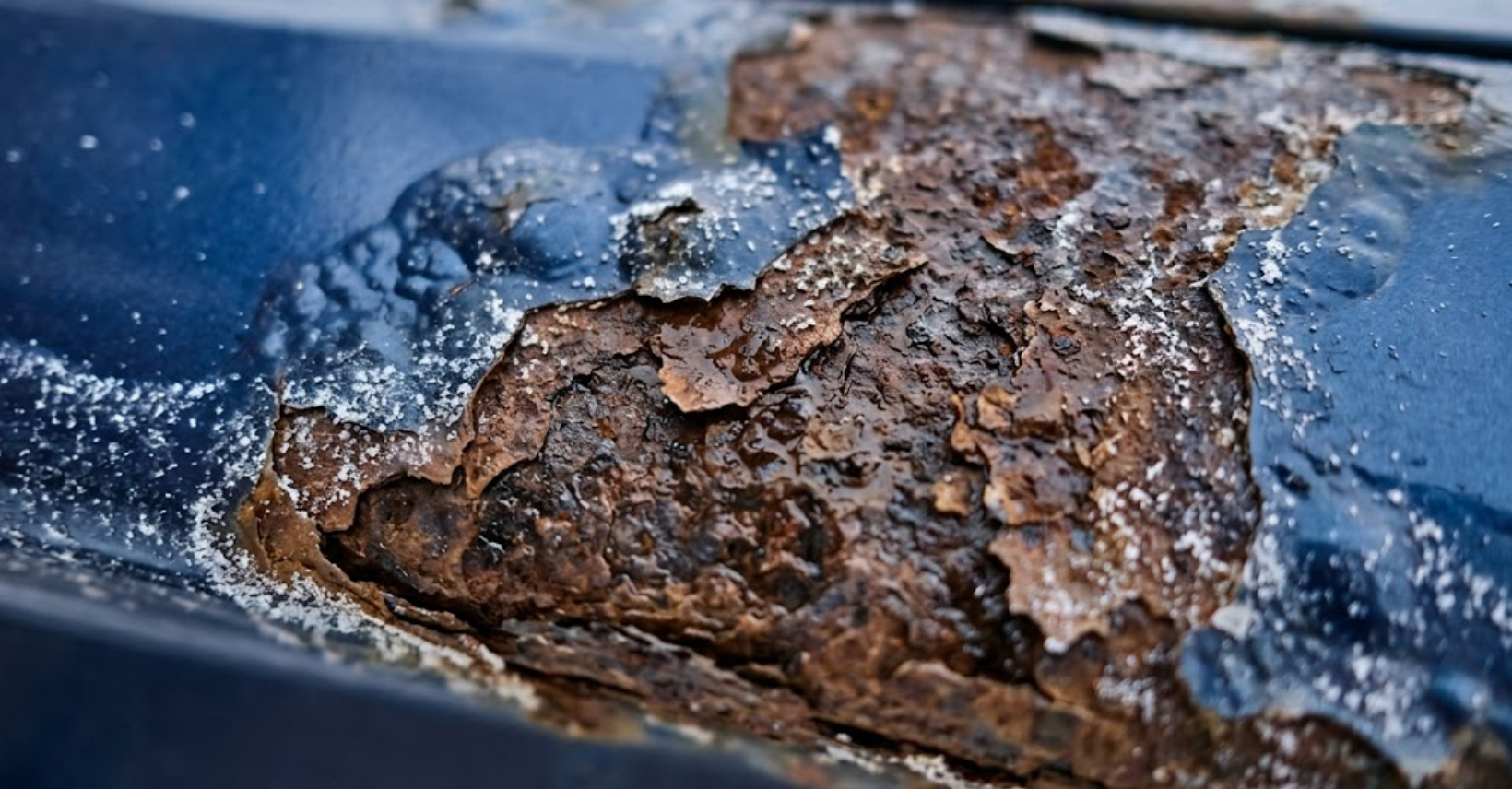
Rust forms through a chemical reaction between iron, water, and oxygen. That reaction creates iron oxide on the metal surface. When moisture and oxygen stay on exposed steel, rust formation starts.
How Rust Forms
The science behind rust matters because once the protective layer breaks, rust can spread under paint and eat away at the metal.
Salt does not create rust by itself, but it speeds the oxidation process by making water more conductive. That is why road salt is such a problem in a city with long winters and freeze-thaw swings.
Water and oxygen do the damage together. In the presence of water or moisture, steel starts to break down. That oxidation process turns strong metal into weak, flaky corrosion.
What Opens the Door to Rust
A scratch, a dent, or chipped paint can open the door. Bird droppings, grime, and direct exposure to slush can also wear down a car’s protective layer.
When that protective coating fails, the metal underneath sits open to water and oxygen. That is when automotive rust starts to grow. A single scratch on a metal surface can grow into one of the first rust spots if it sits too long.
Why Calgary Cars are Vulnerable to Rust
In Calgary, wheel wells, rocker panels, door bottoms, and the undercarriage take the biggest hit. Those areas trap water and salt. They stay wet longer.
That is why a rusty undercarriage can show up even when the paint job still looks decent from ten feet away. Our winters may not match coastal areas, but road crews use products that still contribute to rust.
Signs of Rust on Your Car and When You Need Car Rust Repair
Rust rarely stays small.
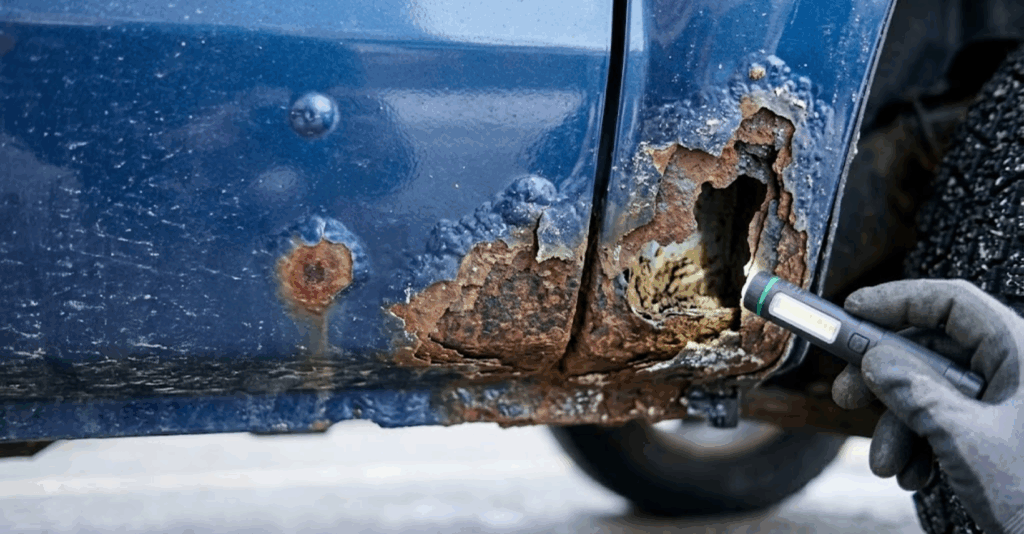
You may first see surface rust, a bubble under paint, or spot rust near a scratch. You may also notice unsightly stains around seams, the edge of a fender, or inside the wheel wells.
Early Signs of Rust
Catching rust early gives you a shot at repair before structural integrity drops.
These early signs of rust matter:
- Rust spots around doors, wheel arches, and the trunk
- Paint lifting over hidden corrosion
- Brown streaks after a car wash
- Developing rust spots near chips or seams
A car owner who can see rust early has more repair choices. Surface rust and light automotive rust may still be manageable before rust can spread.
When Surface Rust Turns Serious
Once rust moves past the surface, repair costs rise fast and the chance of costly repairs jumps. Surface rust can become scale rust, and scale rust can lead to rust holes.
You may notice flaking metal on the undercarriage, soft steel near a dent, or rust holes in floors and rocker panels. Rust damage does more than hurt looks. It can weaken the car body, brake line areas, and key mounting points.
When You Need Car Rust Repair
That is when many body shops start talking about cutting, welding, and panel replacement instead of basic rust removal. In those cases, a car owner may need car rust repair that costs more than the vehicle is worth.
Understanding what causes rust pays off here. You can decide whether to repair the damage, or sell the vehicle before rust may spread any further.
Rust Prevention Tips for Keeping Your Car in Prime Condition
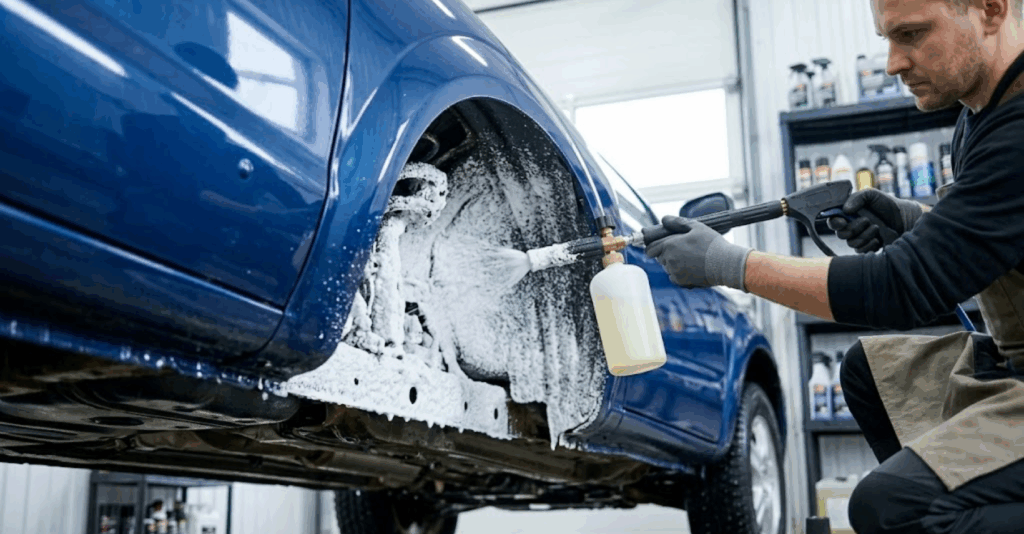
Rust prevention starts with habits.
Regular maintenance, fast cleanup, and regular inspections give you the best shot to prevent rust and keep your vehicle rust-free.
Rust Prevention Starts with Washing
A good rinse matters because road salt sticks hard. Salt accelerates the rusting process by lowering the freezing point of water. That keeps slush active on roads and on your vehicle.
That same water and salt mix clings to steel and fuels rust formation. A proper car wash, with attention to the undercarriage and wheel wells, can help stop that cycle.
How to Prevent Rust on a Car
Here are our expert tips for keeping rust at bay in Calgary:
- Wash off road salt after storms
- Spray the undercarriage and wheel wells well
- Fix each scratch before water gets under paint
- Repair each dent that cracks the finish
- Add rust-proofing or another protective coating
- Keep drain holes clear to prevent moisture buildup
- Check hidden areas of your car each season
These steps support rust prevention and help stop rust on a car before it turns into a bigger issue. They also keep rust at bay and support keeping rust at bay through every season.
Why Regular Maintenance Still Matters
Rust doesn’t wait for a car owner to get around to car care. It grows while the vehicle sits. Ensuring your vehicle is clean can help stop corrosion before it gets a deeper hold.
That is a key part of keeping your car in prime condition. It is also one of the best ways to keep your vehicle looking solid and keep rust from spreading under a damaged protective layer.
Still, no step can keep rust away forever. When scale rust sets in, even strong rust repair may not be the smart money move.
The Effect Of Corrosion On Scrap Prices
Rust hits value in two ways.
First, rust cuts the number of parts worth saving. Second, heavy corrosion can reduce weight, slow removal, and make the vehicle harder to process.
How Rust Lowers Scrap Value
A little rust may trim your offer. Deep rust can change the whole equation. Understanding why scrap car prices change frequently can help you decide if today is the right time to sell.
Scrap buyers still want steel, aluminum, batteries, and catalytic converters, but severe vehicle rust lowers the upside from reusable parts and safe dismantling. That is one reason scrap values change from one vehicle to the next.
Rust may look like a surface problem, but it can affect structural integrity, recovery time, and total material value. Knowing how to find reliable junk car buyers in your area ensures you get a fair assessment regardless of the rust. When corrosion has eaten away at the metal, the return drops.
When Repair No Longer Makes Sense
At Calgary Scrap Auto Removal, we look at weight, metal mix, condition, and what can still be recovered through recycling. Our quotes stay clear, and our towing is free, so you know what the number means from the start.
When repair bills climb, scrapping can be the clean exit. That is true for rust-free dreams that are long gone, and for cars with rust on your car that has moved into the frame, floors, or seams.
A rust repair job can make sense on a newer vehicle. On an older one, the same repair may cost more than the whole car is worth.
Why Rusty Vehicles Still Have Value
We also see the upside after pickup. End-of-life vehicles still hold recyclable steel, aluminum, and salvageable components. That makes scrap removal a financial choice and an environmental one.
If you are in Calgary, Airdrie, Cochrane, Chestermere, or Okotoks, we can turn a rusty vehicle into cash without the usual stress. Our team offers comprehensive coverage across the Calgary region to ensure prompt service. We buy vehicles in any condition, and we do not hide fees in the final pickup.
When rust starts to win, the best move is not always another repair. You can get a free scrap car quote in minutes to see how much your vehicle is worth today. Sometimes the smart move is to cash out, clear space, and let the next stage of the vehicle’s life start with proper recycling. Finding quick ways to trade your old car for cash allows you to move on to a more reliable vehicle sooner.